Skip to content
COP31RADAR WEEKLYISSUE 162 NOVEMBER 2026ANTALYA

One week to COP31: Antalya’s climate record and finance tensions.

The deadly tornado in Antalya, Africa’s agenda proposals, Türkiye’s 2035 target and the Peoples’ Climate Summit.

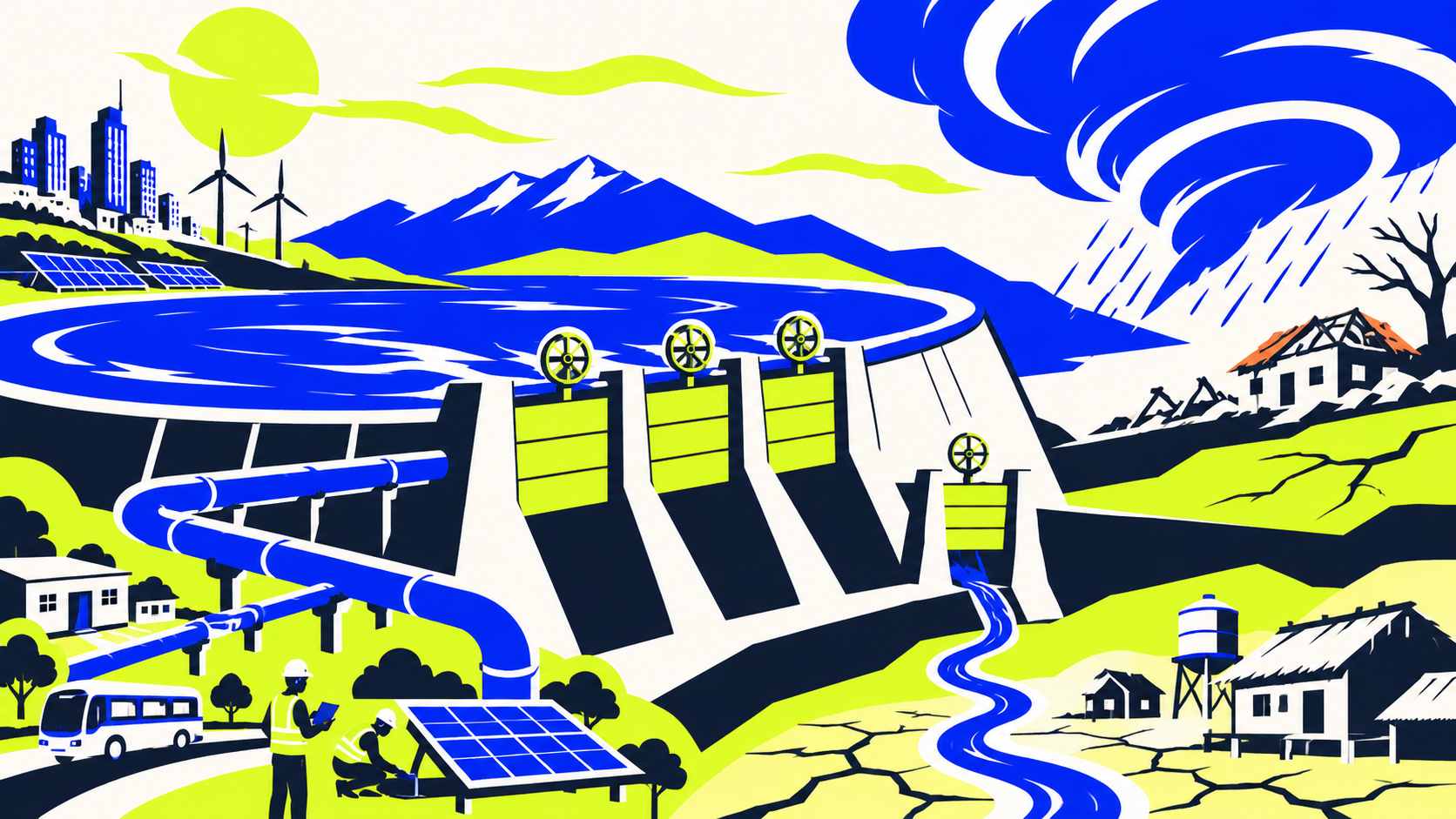
Editorial illustration of Antalya’s coastal landscape and the competing climate pressures converging before COP31

On COP31Radar: Antalya research and the events guide

Our research this week · Antalya’s climate record

COP31Radar’s three-page research briefing published on 29 October examines the city’s temperature record and past severe weather events. It finds a 0.82°C difference between two consecutive decades and documents 28 deaths across ten selected incidents. The methods and findings are explored in our feature “Four workers killed in Antalya and the city’s climate risks.”

Source: COP31Radar, Antalya climate data briefing, 29 October 2026.

Read the Antalya climate analysis ↗

Track COP31 events in one place

COP31Radar Events brings together Blue Zone and Green Zone programmes, pavilions, independent meetings and COP31-related online events. You can search the programme, save sessions and add them to your calendar. The guide is updated as new events are announced.

As of 2 November, the guide lists 2,071 event records. The count includes umbrella programmes and their associated sessions; it may change during the conference.

COP31Radar Repository brings together reports, statements and programmes. Readers can also submit documents for consideration.

Access: UNFCCC accreditation is required for the Blue Zone; visitor registration is required for the Green Zone. Some individual events require additional registration.

Hello from Antalya.

COP31 begins in one week. Antalya is preparing to welcome heads of state and negotiating delegations for a programme of hundreds of events. A tornado killed four workers in Antalya a week ago. On the night of 26 October, two container units used as workers’ accommodation at a construction site in Kepez were torn apart. Three of those killed were Syrian nationals. The incident has raised questions about the safety of temporary accommodation and the measures taken after weather warnings were issued.

COP31Radar’s Antalya briefing, published on 29 October, also examines the city’s long-term climate record. It finds that average temperatures in 2016–2025 were 0.82°C higher than in the preceding decade. A review of sources documents 28 deaths across ten selected incidents. The scope and limitations of this research are set out in our first feature.

On the diplomatic front, African countries are seeking a formal COP31 agenda item on adaptation finance. Caribbean countries are calling for funding that does not add to their debt burden as climate losses mount. Pacific organisations want Australia, which will chair the negotiations, to deliver progress on transitioning away from fossil fuels. New UNFCCC reports show that countries’ emissions pledges still fall short of what is needed to hold warming to 1.5°C.

Host country Türkiye’s 2035 climate target is part of that debate. Meanwhile, the Peoples’ Climate Summit is preparing a parallel agenda in Antalya centred on labour, energy democracy, peace and food sovereignty.

This week we examine the disagreements facing negotiators, Antalya’s climate record and the final preparations for those attending COP31.

COP31RADAR RESEARCH · 29 OCTOBER

Antalya’s climate record

A 0.82°C difference between consecutive decades. Twenty-eight deaths documented in ten selected incidents. We examine the research in our first feature.

Read the feature ↗
Editorial illustration of a tornado approaching temporary workers’ accommodation at a construction site in Antalya

Preparation Desk

01

Accommodation support for young delegates: Deadline 2 November

Accommodation applications for young delegates from LDCs and SIDS close on 2 November.

The COP31 Presidency is offering bed-and-breakfast accommodation for registered delegates aged 18–35 from Least Developed Countries (LDCs) and Small Island Developing States (SIDS) for the period 8–22 November. Applications close at 23:59 Türkiye time on 2 November. Eligibility documents include a COP31 acceptance letter, passport and travel documentation. Rooms will be allocated according to application order and availability. Requirements and application.

02

Registration confirmation for NGO delegates closes 8 November

The deadline applies to NGO and IGO delegates who have already been nominated.

For previously nominated delegates of UNFCCC-admitted non-governmental and intergovernmental organisations, the registration confirmation period ends on 8 November at 23:59 CET. This is not a deadline for submitting new nominations. Organisations should check their entries in the Online Registration System (ORS). UNFCCC participant information.

03

Green Zone closed to visitors on 11–12 November

No visitor access on 11–12 November; QR-code registration remains a requirement.

The World Leaders Climate Action Summit takes place on 11–12 November. The Green Zone will be closed to visitors on those two days. Regular visits require QR-code registration, which is separate from Blue Zone accreditation. Visitor registration · UNFCCC guidance.

04

First-week programme and the Peoples’ Climate Summit

The first week’s thematic programme and the dates for the Peoples’ Climate Summit.

The COP31 thematic programme highlights food, agriculture and health on 9 November; energy and transport on 10 November; zero waste and methane on 11 November; resilient cities on 12 November; and finance and trade on 13 November. These are the Presidency’s thematic event days; formal negotiations follow a separate decision-making timetable. COP31 programme.

At the Peoples’ Climate Summit, the Labour Assembly will meet on 12–14 November, followed by a march and rally on 14 November and main sessions on 15–18 November. Summit programme.

Ten stories this week

African countries seek three additional items on the COP31 agenda.

Ghana, acting on behalf of the African Group of Negotiators, has written to UNFCCC Executive Secretary Simon Stiell requesting three items on the formal agenda: at least tripling adaptation finance by 2035; the relationship between climate change and international trade; and the funding arrangements of the Green Climate Fund.

The COP30 agreement to triple adaptation finance left the baseline year, monetary value and funding responsibilities unresolved. During the Bonn talks in June, developed countries led by the EU, the United Kingdom and Japan opposed linking adaptation finance to discussions on the Global Goal on Adaptation. Africa’s request could make agreement on the opening agenda difficult in Antalya. Climate Home News.

UNFCCC: New climate pledges still fall short of 1.5°C.

According to the latest UNFCCC synthesis, 127 nationally determined contributions (NDCs), representing 154 Parties to the Paris Agreement, were recorded between early 2024 and the end of August 2026. Current national targets could reduce global emissions in 2035 by around 6% compared with 2019. Full implementation of broader pledges could bring that reduction to 9%. Both projections fall short of the cuts needed to meet the Paris goals.

A separate adaptation assessment published the same day shows that 81 developing countries have submitted national adaptation plans. Yet project approvals and the transfer of funding to countries continue to take time. UNFCCC.

Independent assessment rates Türkiye’s 2035 target “critically insufficient”.

Türkiye’s 2025 submission sets a 2035 greenhouse-gas emissions limit of 643 million tonnes of CO₂ equivalent, including land use and forestry. Independent group Climate Action Tracker (CAT), using an assumption for this sector, estimates the target at 694 million tonnes excluding land use and forestry — about 31% above 2018 levels.

CAT’s June 2026 assessment rates Türkiye’s 2035 target “critically insufficient”. It argues that the business-as-usual baseline is too high and that emissions could remain below the target even under existing policies. With Türkiye presiding over COP31, attention will turn to whether the host announces stronger measures. Climate Action Tracker · Türkiye’s NDC.

Caribbean countries issue joint Antalya declaration.

Climate ministers from the Caribbean Community (CARICOM) have issued an Antalya Declaration calling for the 1.5°C goal to be upheld, a workable pathway to tripling adaptation finance by 2035, and adequate resources for the Fund for Responding to Loss and Damage.

The declaration warns that escalating disaster losses are eroding small island states’ budgets and development spending. Caribbean countries want finance delivered promptly and on suitable terms. CARICOM statement and full declaration.

Pacific groups look to Australia for results on fossil fuel phase-out.

Climate organisations in Fiji are urging Australia, which will chair the COP31 negotiations, to put Pacific priorities at the centre of the agenda. Their demands include a clear pathway away from fossil fuels and access to climate finance that does not create additional debt.

The Climate and Health Alliance and Litiana Lagibalavu of Fiji-based Alliance for Future Generations argue that Australia, a developed economy in the Pacific, carries a particular responsibility. Türkiye will hold the COP31 Presidency while Australia chairs the negotiations. ABC Pacific, 30 October · UNFCCC roles.

Loss and Damage Fund provisionally sets aside $21.6 million for Nepal.

Following flooding in Nepal in August, the Board of the Fund for Responding to Loss and Damage announced that it had provisionally set aside $21.6 million. Nepal must submit a project proposal and complete the approval process before the funds can be made available. A preliminary assessment puts recovery and reconstruction needs at around $4.8 billion.

Nepalese authorities have described the anticipated grant as $20 million. The Fund’s provisional allocation of $21.6 million is not a final project approval or disbursement. Fund for Responding to Loss and Damage · Nepal Ministry of Finance · Nepal Ministry of Foreign Affairs.

Amnesty calls for safeguards for the right to protest at COP31.

The directors of Amnesty International in Brazil, Türkiye and Australia have jointly called for the safe participation of environmental defenders and protection of the right to peaceful protest ahead of COP31. They raise concerns about Articles 11.11 and 11.12 of the Host Country Agreement between Türkiye and the UNFCCC.

Amnesty also criticises the influence of fossil fuel companies on negotiations. The UNFCCC, meanwhile, said on 9 October that the agreement includes strengthened human-rights and inclusion provisions. How these protections work in practice will be scrutinised during the conference. Amnesty International · UNFCCC.

Peoples’ Climate Summit plans around 150 events in Antalya.

The Peoples’ Climate Summit (HİZ) will begin with a march and rally on 14 November, followed by meetings at the Mimar Sinan Congress Centre on 15–18 November. Organisers expect around 150 events involving more than 130 organising bodies, with speakers from 32 countries. Around 300 international and more than 200 local supporting organisations are counted separately.

Labour, energy democracy, the rights of nature, peace and food sovereignty are among the main themes. We examine the Summit’s political agenda in a feature below. Summit programme.

Lancet Countdown estimates 710,000 heat-related deaths in 2023.

The 2026 Lancet Countdown report estimates that 710,000 people died worldwide from heat-related causes in 2023. Researchers attribute more than 70% of this burden to human-caused climate change. Average annual heat-related deaths have risen by approximately 36% compared with the preceding decade.

The report tracks climate-related health risks and responses across 54 indicators. Health is also on the agenda for COP31’s first thematic day. World Health Organization / Lancet Countdown.

COP31 Presidency announces Antalya Compact on energy-efficient buildings.

The COP31 Presidency has announced the Antalya Compact for Energy-Efficient Buildings. The initiative aims to reduce operational energy intensity across the global building stock by 25% by 2035 compared with 2020, and to increase electricity’s share of global final energy consumption to 35% by 2035.

Building renovation, energy performance, electrification of heating and cooling, and finance are among the Compact’s six action areas. Governments can endorse the initiative, but delivering its targets will require national plans, finance and monitoring. COP31 Presidency, 29 October.

Five features this week

Four workers killed in Antalya and the city’s climate risks

Weather warnings were in place in the city hosting COP31. The containers housing workers did not withstand the tornado.

+0.82°CTemperature difference between two consecutive decades
Read the full feature

Weather warnings were in place in the city hosting COP31. The containers housing workers did not withstand the tornado.

On the night of 26 October, a tornado struck a construction site in the Fevzi Çakmak neighbourhood of Kepez, sweeping away two container units used as workers’ accommodation. Four workers died and one person was injured. Three of those killed were Syrian nationals and one was Turkish. The site owner and the construction manager were remanded in custody on 28 October; two others were released under judicial supervision. The investigation is continuing.

COP31Radar’s Antalya research briefing, published on 29 October, places the disaster alongside the city’s longer-term climate record. An Antalya-area temperature series derived from ERA5-Land reanalysis gives an average of 14.26°C for 2006–2015 and 15.08°C for 2016–2025 — a rise of 0.82°C between the two decades. In the same series, 2024 was the warmest year from 1950 to 2025, at 16.09°C. These figures come from ERA5-Land reanalysis rather than direct measurements at a weather station in central Antalya.

Antalya’s Provincial Disaster Risk Reduction Plan, published by AFAD, records 15 tornadoes in 2005–2010, 54 in 2010–2015 and 76 in 2015–2020. Changes in reporting systems and observation coverage mean the increase cannot simply be attributed to climate change. The research also examines other extreme weather events: approximately 491 mm of rain fell in a day at Kemer/Ovacık on 17 December 2018, setting a Turkish record; on 13 February 2024, Kepez recorded 297.7 mm, the country’s highest daily rainfall reported that year.

The briefing documents 28 deaths across ten selected incidents. This is not a comprehensive toll of disaster deaths in Antalya. Nor is there an event-attribution study quantifying the role of human-caused climate change in the Kepez tornado.

The more immediate question is: What was done to protect workers in temporary accommodation after the weather warnings? The effectiveness of adaptation policies should be visible at worksites, in places where people live, and in the action taken when early warnings arrive.

COP31’s Resilient Cities and Built Environment Day on 12 November will carry particular significance in the host city after this disaster.

Sources: COP31Radar, Antalya climate data briefing, 29 October 2026 (original research PDF); Anadolu Agency, 27 October; Anadolu Agency, two suspects remanded, 28 October.


Five disputes facing the COP31 negotiations in Antalya

Even adoption of the agenda could prove contentious. Divisions persist over finance, trade and just transition.

5Key issues on the COP31 negotiating agenda
Read the full feature

Even adoption of the agenda could prove contentious in Antalya. Divisions persist over finance, trade and just transition.

1. Adaptation finance. At COP30, countries agreed to at least triple adaptation finance for developing countries by 2035. But no baseline year or specific monetary value was agreed. The African Group is therefore seeking a separate negotiating item. The EU, United Kingdom and Japan opposed placing finance within the Global Goal on Adaptation discussions in June. Where this issue is negotiated in Antalya could matter politically.

2. Climate measures and trade. Trade measures such as the EU’s Carbon Border Adjustment Mechanism raise cost and competitiveness concerns in developing countries. The African Group wants formal talks on the climate–trade relationship; China has also criticised climate-related trade restrictions. The debate could become a dispute over how the economic costs of emissions cuts are distributed between countries.

3. The Global Goal on Adaptation’s 59 indicators. Adopted at COP30, the Belém indicators provide a new framework for tracking adaptation efforts. A UNFCCC technical assessment dated 30 September shows that many require further methodological development and better data. Antalya will consider their implementation, data capacity and links to finance. Another question is how well national averages capture the differing risks faced by women, children, people with disabilities and other communities.

4. The Belém–Antalya Just Transition Mechanism. COP30 agreed to develop the mechanism, but its governance, institutional relationships and funding arrangements remain unsettled. Proposals released by Climate Action Network on 22 October stress the participation of workers and communities in decisions and the need for the mechanism to function in practice. Decisions on its structure and resources will need to be followed together.

5. Transitioning away from fossil fuels. Pacific organisations are asking for a clear timetable. Türkiye’s energy-efficiency and electrification initiatives could bring progress in particular sectors, but they cannot substitute for a broader political agreement among Parties on moving away from coal, oil and gas. The treatment of this issue in COP31’s outcome text will matter.

Announcements of new targets alone will not determine the outcome. The scope of decisions, their timetable, available resources and the allocation of responsibility will be just as important.

Sources: Climate Home News, African Group agenda request; UNFCCC, technical assessment of the 59 indicators; Climate Action Network, Belém–Antalya mechanism proposal.

How much will Türkiye’s 2035 target actually cut emissions?

As COP31 host, Türkiye faces scrutiny over the real emissions impact of its own 2035 target.

643 MtTürkiye’s official emissions target for 2035
Read the full feature

Türkiye is hosting COP31. The impact of its own 2035 target on actual emissions therefore deserves close examination.

In its second nationally determined contribution (NDC), submitted in November 2025, Türkiye pledged to limit greenhouse-gas emissions to 643 million tonnes of CO₂ equivalent in 2035. The government describes this as 466 million tonnes below a business-as-usual scenario in which emissions would reach 1.109 billion tonnes. Both figures include land use and forestry.

Because the government did not provide a separate 2035 land-use and forestry projection, Climate Action Tracker (CAT) assumes that the sector’s net sink in 2035 remains at its projected 2030 level. On that basis, CAT estimates the target at 694 million tonnes excluding land use and forestry, or 31% above 2018 emissions in its comparison. The official target is 643 million tonnes; 694 million tonnes is CAT’s adjusted estimate.

In its June 2026 assessment, CAT finds that Türkiye’s target is not aligned with 1.5°C. It considers the government’s business-as-usual scenario unrealistic and argues that 2035 emissions could fall below the target even if existing policies simply continue. CAT argues that the target does not require deeper cuts. CAT rates it “critically insufficient”.

Türkiye has adopted climate legislation and is preparing an emissions trading system. But the target contains no coal phase-out timetable or new binding sectoral emissions-reduction targets. As the new Antalya Compact focuses on energy efficiency in buildings, the debate over Türkiye’s national target continues.

During COP31, we will watch for any move to strengthen Türkiye’s 2035 target or make substantive changes to its coal and natural-gas policies.

Sources: Türkiye’s 2025 NDC; Climate Action Tracker, June 2026 assessment; COP31 Presidency, Antalya Compact.

What demands will the Peoples’ Climate Summit bring to Antalya?

The Summit brings labour, energy, food and democracy into a parallel climate agenda.

14–18Peoples’ Climate Summit · November 2026
Read the full feature

The Peoples’ Climate Summit brings questions of labour, energy, food and democracy into a parallel agenda alongside the UN climate negotiations.

The Antalya Summit will begin with a march and rally on 14 November. The Labour Assembly on 12–14 November will bring together unions from Türkiye and abroad. From 15 to 18 November, plenary sessions, panels, workshops and forums will take place at the Mimar Sinan Congress Centre. Organisers are planning around 150 events involving more than 130 organising bodies, with speakers from 32 countries. Almost 300 international and more than 200 local organisations are also listed as supporters.

The four main thematic sessions focus on the Rights of Nature on 15 November; Fossil Fuel Phase-out and Energy Democracy on 16 November; Democracy, Anti-militarism and Peace on 17 November; and Food Sovereignty and Agroecology on 18 November. The Summit also plans discussions on climate debt, carbon markets, war, gender inequality and waste trade.

These debates have direct points of contact with COP31. While the formal negotiations consider how a just-transition mechanism should work, the Summit will discuss preventing the costs of the energy transition from falling on workers, public energy policies and workers’ participation in decisions. Discussions on historical responsibility and climate debt speak to the COP finance agenda. Sessions on ecological destruction and food sovereignty will examine the impacts of climate policy on land, production and livelihoods.

We will follow the positions emerging from the Summit and whether any of its demands reach the COP31 negotiating agenda.

Sources: Official Peoples’ Climate Summit programme; Organisers’ statement, 21 October.

Climate finance: Who has access to the $1.9 trillion?

Annual climate finance averaged $1.9 trillion in 2023–2024. The most vulnerable countries still struggle to access the funds they need.

$1.9tnGlobal annual average climate finance reported by the UNFCCC
Read the full feature

Global climate finance averaged $1.9 trillion a year in 2023–2024, while countries most exposed to climate harm continued to face major barriers to funding.

According to a UNFCCC assessment published on 27 October, global public and private climate finance averaged $1.9 trillion annually in 2023–2024, 32% higher than in the previous comparison period. This includes domestic investment, private-sector finance and different financial instruments. It is far broader than the grants provided by one country to another.

In their Antalya Declaration, Caribbean countries demand predictable, affordable finance for adaptation. Small island states face the prospect of taking on more debt to recover from disasters. The distinction between grants, concessional loans and commercial investment is therefore politically consequential.

Flooding in Nepal in August illustrates the scale of the gap. A preliminary damage and needs assessment estimated around $4.8 billion in recovery and reconstruction needs. The Fund for Responding to Loss and Damage provisionally set aside $21.6 million for Nepal and allowed the country to submit a request outside the normal application cycle. Nepal’s government described the expected grant as $20 million; the provisional allocation is not yet final approval or disbursement.

The African Group’s request to put adaptation finance on the COP31 agenda raises a similar issue. The baseline year, monetary value and sources of funding for the goal of “tripling by 2035” remain unsettled. A finance pledge still needs to become an approved project — and an approved project must lead to money reaching the intended recipients.

New finance pledges may be announced at COP31. We will examine who can access the money, whether it comes as grants or loans, and when it becomes available.

Sources: UNFCCC finance assessment, 27 October; CARICOM Antalya Declaration; Fund for Responding to Loss and Damage; Nepal Ministry of Foreign Affairs.

Radar briefs

UNEP publishes its 2026 Adaptation Gap Report.

Published on 28 October, the report examines progress in adaptation planning and the finance and capacity needed to turn plans into action. UNEP.

Belém’s 59 adaptation indicators return to the table.

A UNFCCC technical note dated 30 September assesses the indicators’ methodologies, data availability and compatibility with existing reporting systems. UNFCCC technical note.

Civil society proposals for the Just Transition Mechanism.

Climate Action Network released a discussion paper on 22 October proposing roles and governance arrangements for the Belém–Antalya mechanism. CAN.

New global assessment of ecosystem restoration.

A new assessment announced by UNEP, FAO and the Convention on Biological Diversity on 29 October documents restoration activities across 252 million hectares in 149 countries. It maps areas where work is under way and calls for faster progress towards restoration targets. UNEP.

WMO to release new climate data as COP31 opens.

The World Meteorological Organization’s update on the state of the global climate in 2026 is scheduled for 9 November. WMO.

Companies dominate the Green Zone’s first published programme.

COP31Radar’s first review of 189 sessions announced as of 31 October found that companies and banks organised the majority of those listed. The distribution may change as the programme is updated. Source: COP31Radar, initial review of the Green Zone programme, 31 October 2026.

Young sailors collecting observations at sea amid changing weather

Young Sailors Bring Changes at Sea to COP31

Young sailors and experienced seafarers gathered at Marmara Sailing Club in Istanbul on 22 October as part of Sailing to COP31, a project organised by the Turkish Sailing Federation and Climate Reality Project Istanbul Hub.

Participants shared their experiences of sudden storms, winds rising from 10 to 35 knots within 15 minutes, changes in seawater temperature, and the impact of intense UV radiation on sailing equipment. They also discussed mucilage in the Sea of Marmara, red algae blooms and the effects of coastal development on local wind conditions.

The discussions also turned to the Akkuyu Nuclear Power Plant, along the route towards Antalya. Participants stated that the plant's open-loop cooling system has permission to raise seawater temperatures by 2°C, warning of potential impacts on regional winds, currents and marine ecosystems.

The project aims to turn sailboats into platforms for collecting water temperature and pH data, share the findings with scientific institutions and bring them together on a digital climate solutions map for sailors. The planned journey from Istanbul to Antalya via Çeşme and Bodrum will also carry a Youth Climate Manifesto to COP31.

Source: Bedirhan Sabuncuoğlu, Climate Reality Project Istanbul Hub

Who should pay attention?

01NGOs and social movements.

The Peoples’ Climate Summit programme on 12–18 November; registration confirmation by 8 November; and COP31 debates on just transition, climate finance and public participation. Access rules differ between the Blue Zone, Green Zone and independent meetings.

02Municipalities and local stakeholders.

Resilient Cities Day on 12 November; the Antalya Compact’s agenda on building renovation and energy efficiency; local adaptation plans and early-warning systems. The tornado in Antalya also brings workers’ accommodation and disaster safety into focus.

03Researchers, specialists and journalists.

New UNFCCC reports on emissions and adaptation; Türkiye’s 2035 target; statements from Africa and CARICOM; the Belém indicators; and COP31Radar’s Antalya research. Publication dates and methods matter when comparing sources.

Critical reading

How will COP31’s participation commitments hold up in practice?

The UNFCCC announced on 9 October that the Host Country Agreement, which entered into force on 18 September, includes new provisions on human rights and inclusion. In a joint opinion piece published on 29 October, Amnesty International’s directors in Brazil, Türkiye and Australia raised concerns about Articles 11.11 and 11.12. The organisation argues that the provision requiring participants not to interfere in Türkiye’s internal affairs, together with the arrangements on immunities, raises concerns about freedom to criticise and protest.

Read in full

The UNFCCC announced on 9 October that the Host Country Agreement, which entered into force on 18 September, includes new provisions on human rights and inclusion. In a joint opinion piece published on 29 October, Amnesty International’s directors in Brazil, Türkiye and Australia raised concerns about Articles 11.11 and 11.12. The organisation argues that the provision requiring participants not to interfere in Türkiye’s internal affairs, together with the arrangements on immunities, raises concerns about freedom to criticise and protest.

Their warning reflects Amnesty International’s wider concerns about pressure on civil society in Türkiye. It calls for environmental defenders to be able to speak freely and protest peacefully. It also argues that fossil fuel companies enjoy greater access to the negotiations than communities affected by the climate crisis have influence over decisions.

The test will be how the stated protections work in practice. Who can enter the Blue Zone? Which meetings can civil society organisations access? Under what conditions can peaceful demonstrations take place? Can the demands raised at the Peoples’ Climate Summit find a route into formal negotiating texts?

Attendance figures alone say little about who can shape decisions or how dissent is handled.

Sources: Amnesty International, 29 October; UNFCCC, 9 October; UNFCCC participant information.

Coming up

9 November — Opening agenda: Will the African Group’s three proposals on adaptation finance, trade and the Green Climate Fund become part of formal negotiations?

Adaptation finance: Will Parties agree on the baseline year, monetary value and types of funding behind the pledge to triple finance by 2035?

Just transition: How will the Belém–Antalya Mechanism’s mandate, governance and finance be defined?

Transitioning away from fossil fuels: Can countries agree on a concrete roadmap?

Global Goal on Adaptation: How will Parties address the use of 59 indicators, data gaps and the experiences of vulnerable groups?

Türkiye’s target: Will the host country announce steps on its 2035 emissions target or fossil fuel policies?

Participation and rights: How will safeguards on accreditation, press access and the right to protest be applied?

The Peoples’ Climate Summit and Antalya: Will the Summit’s demands and the city’s disaster-safety debate influence the COP31 agenda?

And finally, from Antalya.

The first week of COP31 will be crowded with events and politically demanding negotiations. Africa’s proposed agenda additions, the practical meaning of adaptation finance, Türkiye’s climate target and the conditions for civil society participation all deserve close attention.

In Antalya, a question remains after the deaths of four workers: Can weather warnings protect people living and working in the most precarious conditions?

COP31Radar will continue to follow the negotiations and other meetings across Antalya. The updated events programme and document repository are available.

COP31Radar · Independent coverage of COP31 from Antalya.

Follow COP31 in your inbox.

Subscribe for independent analysis and practical guides.