Skip to content
COP31RADAR WEEKLYISSUE 17 · COP31 SPECIAL EDITION24 NOVEMBER 20269–22 NOVEMBER · ANTALYA

We can no longer afford to get lost in the details.

The climate crisis threatens humanity’s future. We need genuine systemic change: a just transition away from fossil fuels, investment in public services and clean energy, the sharing of wealth and responsibility, and recognition of peoples’ rights and decision-making power.

In this issue · Hello from Antalya
✳

Hello from Antalya.

For months, we followed the road to COP31 from Antalya. Over the past two weeks, we shared the city with climate movements, civil society organisations, local governments, public institutions and companies from around the world.

On 22 November, after running almost two days beyond schedule, COP31 ended without the adoption of the Antalya Pact. The final draft did not even explicitly mention fossil fuels, the primary cause of the climate crisis.

We paused our weekly newsletter during the conference. In this special edition, we examine what happened in Antalya, why the negotiations failed, whose interests were protected and what can be done from here.

Why was this one of the most unsuccessful COPs in history?

01

No new decision on transitioning away from fossil fuels.

Following the call adopted in Dubai in 2023 for a just transition away from fossil fuels in energy systems, countries were expected to agree on a roadmap for putting it into practice. Fossil fuel-dependent economies, particularly Saudi Arabia and Russia, blocked language to that effect. The final draft offered no clear direction for the transition called for in the Dubai decision. The existing Paris and Dubai decisions remain in force.

02

Carbon capture was given political priority.

The draft proposed scaling up carbon capture, utilisation and storage (CCUS) capacity to the gigatonne scale by 2035. This language was not adopted. The technology may have a limited role in hard-to-abate sectors such as cement, but using it to justify continued fossil fuel use delays emissions reductions at source. Costs, energy requirements and permanent storage must also be considered.

03

No common action emerged to cut emissions rapidly.

Countries’ current climate pledges fall far short of the reductions required under UNEP’s scenario for returning to 1.5°C by the end of the century. No new political package to close this gap was adopted, and no agreement was reached on a new decision under the Mitigation Work Programme. The detailed scientific assessment is provided below.

04

No agreement on how to share the financial burden.

Developing countries called on developed countries to fulfil their public finance responsibilities and provide predictable adaptation funding. In particular, no agreement was reached on the baseline for the goal of tripling adaptation finance by 2035. Wealthy countries’ reluctance to assume new financial obligations undermined the trust needed for stronger climate policies.

COP31 / 101 · What should have happened, and what did?

The second column sets out COP31Radar’s editorial assessment based on science and climate justice. The third describes the negotiating outcomes or the status of voluntary initiatives.

TopicWhat should have happened?What happened?

Antalya Pact

Not adopted
What should have happened?A strong collective political decision on fossil fuels, finance and rights.
What happened?The presidencies’ final draft was rejected.

Transition away from fossil fuels

No new decision
What should have happened?A timetable and support for a just transition away from coal, oil and gas.
What happened?The Dubai decision remains in force; no new roadmap was adopted in Antalya.

Emissions reduction

No new decision
What should have happened?Rapid, science-aligned emissions reductions by 2035 and measures to deliver them.
What happened?No agreement on a new decision under the Mitigation Work Programme.

1.5°C target

Insufficient
What should have happened?Policies to minimise the extent and duration of temperature overshoot.
What happened?The Paris target remains unchanged; no package was adopted to close the gap created by current policies.

Carbon capture

Draft only
What should have happened?Priority for emissions reductions at source; limited use in hard-to-abate sectors.
What happened?Gigatonne-scale CCUS was proposed in the draft but not adopted.

Electrification

Voluntary initiative
What should have happened?Transforming transport, buildings and industry through clean electricity.
What happened?The 35x35 target gained support under the Action Agenda; it is not a negotiated decision.

Adaptation indicators

Technical decision
What should have happened?Usable indicators and implementation support for countries.
What happened?A task force for the 59 indicators and the sharing of lessons from voluntary testing.

Adaptation finance

Insufficient
What should have happened?A baseline, funding, timetable and access arrangements for the tripling goal.
What happened?No new financial target or implementation plan; an Article 6.4 revenue stream for the Adaptation Fund.

Loss and damage

Technical decision
What should have happened?Adequate, rapid and predominantly grant-based finance.
What happened?Technical assistance and access arrangements were strengthened; the funding gap remains.

Just transition

Partial decision
What should have happened?A mechanism guaranteeing workers’ and communities’ rights, decision-making power and access to finance.
What happened?The work programme was extended by three years; details of the mechanism were deferred to 2027.

Global Stocktake

Process launched
What should have happened?A scientific assessment of the emissions, adaptation and finance gaps.
What happened?The second stocktake was launched; its outcomes are scheduled for consideration in 2028.

Carbon markets (Article 6)

Technical decision
What should have happened?Rules preventing double counting and protecting rights and environmental integrity.
What happened?Decisions were adopted under Articles 6.2 and 6.4; they impose no new obligations to reduce fossil fuel use.

Climate technologies

Technical decision
What should have happened?Access to appropriate technologies and finance for developing countries.
What happened?Work advanced under the Belém Technology Implementation Programme.

Transparency and reporting

Technical decision
What should have happened?Adequate support to enable countries to produce comparable data.
What happened?Direction was set for work in 2027–2028 to strengthen developing countries’ reporting capacity.

Indigenous Peoples, women and youth

Insufficient
What should have happened?Protection of rights, direct access to finance and meaningful participation in decision-making.
What happened?Constituencies stated that the outcomes failed to meet their demands on rights and finance.

Lobbying and conflicts of interest

No new decision
What should have happened?Transparent rules limiting the influence of polluting industries on policy.
What happened?No comprehensive new measure addressing conflicts of interest was adopted.

UNFCCC · adopted decisions · UNFCCC · closing assessment · Adaptation Fund · Article 6.4

Who argued for what in the negotiations?

The rejection of the Antalya Pact was the culmination of disagreements over transitioning away from fossil fuels and climate finance. It is important to distinguish the positions taken by different groups of countries. Countries that rejected an inadequate text do not bear the same political responsibility as those that prevented it from being stronger.

Fossil fuel producers: Objections from the Arab Group, represented by Saudi Arabia, Russia and other fossil fuel-dependent countries made it harder to reach a new decision on the future of coal, oil and gas. These countries also raised historical responsibility for emissions, development and finance. Such demands cannot justify continued dependence on fossil fuels.

The EU, the United Kingdom and climate-vulnerable countries: According to documents obtained by Carbon Brief, a coalition of 126 countries encompassing the EU, the Alliance of Small Island States (AOSIS), the Least Developed Countries (LDCs), the Independent Alliance of Latin America and the Caribbean (AILAC) and other groups sought changes to the final draft. Their demands included a more explicit reference to the Global Stocktake decision in Dubai and removal of the numerical target for carbon capture. At least 32 countries rejected the draft at the closing plenary. Not all coalition members should be assumed to have taken the same position at the plenary; consensus was not reached.

The African Group and G77 + China: Developing countries’ demands on finance and development went largely unmet. Speaking on behalf of the African Group, Ghana indicated that the group could support the draft despite shortcomings on adaptation finance and trade. The G77 + China pressed for a just transition mechanism with an institutional structure and the capacity to deliver. Developing countries cannot accurately be reduced to a single negotiating position.

The EU’s contradiction: The EU’s rejection of a text lacking fossil fuel language is understandable. However, developed countries’ restrictive stance on new public finance obligations and the just transition mechanism was also part of the political impasse. Climate-vulnerable countries’ ability to achieve more ambitious mitigation targets depends on financial and technological support actually being provided.

Carbon Brief · country positions and negotiations · Third World Network · finance and just transition · The EU’s own assessment

COP31 decisions · What was adopted, and what remained unresolved?

01

The Antalya Pact and a new mitigation decision were not adopted.

No consensus was reached on the presidencies’ draft overarching political decision. The proposed new decision under the Mitigation Work Programme in Antalya was also not adopted. Previous decisions from Dubai and Paris remain in force.

02

Operationalisation of the just transition mechanism was deferred.

The Just Transition Work Programme was extended by three years. A phased process was agreed to determine the functions and operation of the mechanism whose establishment was agreed in Belém. A draft decision is expected to be prepared in Bonn in 2027 and considered at COP32; funding has yet to be secured.

03

Technical progress on adaptation indicators.

A task force was established to develop methodologies for the 59 Belém adaptation indicators. Countries agreed to share lessons from voluntary testing. No concrete implementation plan for the goal of tripling adaptation finance was adopted.

04

Separate decisions on the Adaptation Fund and loss and damage.

The Adaptation Fund’s transition to serving the Paris Agreement was completed, paving the way for it to receive a 5% share of proceeds from the Article 6.4 carbon market mechanism. Technical assistance processes under the Warsaw International Mechanism and the Santiago Network for loss and damage were strengthened; financing needs remain unmet.

05

The second Global Stocktake was launched.

The second stocktake under the Paris Agreement was launched in Antalya. Following information collection and technical assessment, its outcomes are scheduled for consideration at COP33 in 2028.

06

Electrification advanced under the voluntary Action Agenda.

The 35x35 initiative aims to increase electricity’s share of global final energy consumption to 35% by 2035. This is not a negotiated decision adopted by all parties. Commitments under the initiative should be tracked separately.

Whose voices counted?

Editorial illustration of representation of different social groups in climate decision-making.

A corporate trade fair, a crisis for peoples

How did economic power shape access to climate policymaking and the agenda in Antalya?

The prominence of companies in Antalya’s Green Zone and lobbying in the Blue Zone once again raised questions about the influence of economic power on climate policy. Investments that genuinely reduce fossil fuel use must be distinguished from lobbying that seeks to prolong it.

Funding for public transport, safe housing, water and healthcare cannot be left to market expectations of profitability. Governments should make lobbying and sponsorship arrangements transparent, restrict conflicts of interest and strengthen the decision-making power of workers and communities.

CIEL · carbon capture lobbying · KBPO · polluting organisations · InfluenceMap · corporate lobbying

COP31 in numbers · Representation, lobbying and the climate gap

Host country guest registrations

In Antalya, 14,285 people were registered as host country guests — nearly 11 times the number in Belém. The COP31 figure is based on the provisional list dated 9 November, while figures for previous COPs are based on final lists. Registrations do not demonstrate actual attendance or mean that all guests were corporate representatives. Carbon Brief

Companies and industry lobbies

Using InfluenceMap’s assessments of lobbying, Kick Big Polluters Out (KBPO) identified 103 companies and industry associations represented at COP31 whose activities were seriously misaligned with climate policy or obstructed it. Of these, 60 were from the fossil fuel sector. Their combined representation was many times larger than the delegations of some countries severely affected by the climate crisis.

100×Saint Vincent and the Grenadines
25×Niger
8×Philippines
6×Nepal

The ratio of the combined number of representatives of organisations classified by KBPO to the size of each country’s delegation. KBPO, 13 November

700

Carbon capture representatives

Up from 531 at the previous COP. CIEL identified companies including PT PLN, Pertamina, Gazprom, CNPC, OQ and ExxonMobil, as well as the Global CCS Institute and other industry associations. CIEL

260

Industrial agriculture and food lobbyists

The fertiliser, large-scale livestock, meat and biofuel industries; fertiliser industry representation rose by 45% compared with the previous COP. DeSmog

44 / 26

Lobbying misaligned / aligned with climate policy

InfluenceMap identified 44 companies and industry associations lobbying for climate policies misaligned with the IPCC’s scientific assessments, and 26 actors whose activities were aligned with them. InfluenceMap

30

Banks financing fossil fuels

Thirty of the 100 largest banks financing fossil fuels were at COP31. These banks provided more than $2.2 trillion in financing to the sector between 2021 and 2025. KBPO

Lobbying studies use different definitions and registration lists. These figures should not be added together, as the groups may overlap. Registration and representation alone do not establish who influenced a particular negotiating decision.

The climate crisis: trajectory and finance gap

2.8°C

The world under current policies

According to UNEP, current policies point to around 2.8°C of warming this century, while full implementation of national climate pledges points to around 2.6°C. Both projections exceed the Paris Agreement’s temperature goal. UNEP

45%

Emissions reductions needed by 2035

UNEP’s scenario that limits the extent and duration of overshoot beyond 1.5°C and aims to return to 1.5°C by 2100 requires a 45% reduction by 2035 relative to 2025. The projected 11–15% reduction under full implementation of current national pledges falls far short of that level. UNEP

Adaptation requires $420 billion a year.

28–32billion USD · public finance provided in 2024
85–120billion USD · what the tripling goal would amount to in 2035
420billion USD · annual needs in 2035 (including inflation)

$300–335 billion is the estimated annual finance gap that would remain in 2035 even if the goal were met. The $420 billion estimate reflects developing countries’ needs in 2035 prices; in constant 2024 prices, this amounts to approximately $305 billion. Achieving the tripling goal would cover only 20–29% of the need. UNEP Adaptation Gap Report 2026

Green Zone · Where did companies feature in the programme?

8 NOVEMBER 2026 / DOĞA DERNEĞİ536 EVENTS
Business-linked
48.7%
CSOs
14.7%
Central government
14.9%
Local governments
11.8%

Of the 536 events in the 8 November programme analysed by Doğa Derneği, 261 (48.7%) were business-linked and 79 (14.7%) were organised by civil society. In COP31Radar’s initial review on 31 October, 128 of 189 sessions (67.7%) were organised by companies and banks. As the dates, scope and classification methods differ, these percentages do not measure change over time. Both analyses describe the distribution of events in the programme at the time of publication; neither gives the final number of events held or participants attending.

Doğa Derneği’s analysis found that the 79 civil society events were spread across 44 associations and foundations. The fact that nearly half the programme was business-linked raises an important question about the space available to different sections of society in an area described as open to the public. BirGün · Doğa Derneği’s findings

Doğa Derneği’s research · COP31Radar, 31 October 2026

From Antalya · The realities of participation

In the run-up to COP31, we at COP31Radar tracked the cost of participation, the conference’s information and events infrastructure, and the difference in access between the Blue and Green Zones. In Antalya, we saw once again how much these issues mattered. The Blue Zone housed the official negotiations and accredited participants, while the host-managed Green Zone was set aside for events open to the public. Entry to the Green Zone did not confer access to official negotiations. Holding events open to a wide audience therefore does not necessarily ensure equal participation in decision-making.

The cost of participation: Research conducted on 22 September by the Social Institute of Change and Impact (SICI) and published on COP31Radar examined 208 bookable properties on the official accommodation portal. The median starting cost for the 11-night period from 9 to 20 November was €2,381.72. Only 13.5% of properties had a starting cost of €1,000 or less. The October update showed that the pool of lower-cost options had narrowed. These figures are pre-booking price snapshots; they do not measure what participants actually paid or how many were unable to attend because of the cost.

Access to information and events: Before and during the conference, we brought together official side events, Green Zone events and off-site gatherings on the COP31Radar events platform. Making events across different venues and programmes visible in one place was intended to make participation easier, particularly for civil society organisations in Antalya with limited time and resources.

Questions that remain unanswered after the conference: Who from local civil society was able to access the Blue Zone? Which participants were excluded by accommodation and daily transport costs? How was physical accessibility ensured for participants with disabilities? These questions need to be assessed using final participation lists and participants’ experiences. We do not have a post-conference dataset that answers all of them.

The relationships formed outside the official spaces in Antalya also matter. Accessible meeting spaces and opportunities for collaboration are needed after the conference so municipalities, climate movements, trade unions and local communities can continue working together.

COP31Radar · research · COP31Radar · events platform · UNFCCC · Blue and Green Zones

Civil society voices · 10 statements from Antalya

Climate movements, Indigenous Peoples, youth and women’s organisations, human rights defenders, trade unions and health organisations assessed the outcomes of COP31 from the perspective of their respective fields of work. The texts below are English renderings of our Turkish editorial summaries of the statements; they are not verbatim translations or direct quotations of the original statements. Each summary links to its source.

Anabella Rosemberg · Climate Action Network International · 22 November 2026

Another year lost for just transition.

CAN links the deferral of implementation of the just transition mechanism to 2027 to the political stance of developed countries.

Read the assessment

Anabella Rosemberg, senior adviser on just transition at CAN International, said developed countries had obstructed implementation of the just transition mechanism agreed in Belém. The organisation objects to further delays in establishing a structure capable of responding to the needs of workers and communities affected by the climate crisis. It also attributes the shortcomings on climate finance and transitioning away from fossil fuels to the political responsibility of developed countries.

Original statement

International Indigenous Peoples’ Forum on Climate Change (IIPFCC) · 22 November 2026

Indigenous Peoples’ rights must be at the heart of climate policy.

The IIPFCC closing statement raises the need to protect Indigenous Peoples’ rights and decision-making power in climate action.

Read the assessment

The closing statement of the International Indigenous Peoples’ Forum on Climate Change (IIPFCC) should be read in the context of demands for self-determination, land rights and meaningful participation in climate decision-making. Free, prior and informed consent of communities and direct access to finance are essential in energy and mining projects intended to replace fossil fuels. These rights must also be protected in projects undertaken in the name of emissions reduction.

Original statement

YOUNGO · UNFCCC children and youth constituency · 21 November 2026

Youth organisations called for a stronger decision.

In its open letter before the closing plenary, YOUNGO called for a stronger outcome on fossil fuels, finance and transparency.

Read the assessment

On 21 November, while negotiations were still under way, YOUNGO sent an open letter to the conference presidencies. Youth organisations called for a strong decision on transitioning away from fossil fuels, credible adaptation finance and transparency throughout the process. The letter reminds readers that decisions taken in the negotiations will directly affect the decades young people will live through. It was published before the final conference outcome.

YOUNGO open letter · Pressenza

Amnesty International · Ann Harrison · 22 November 2026

Amnesty: Rejecting a bad agreement does not amount to success.

Amnesty distinguishes the rejection of the draft from states’ failure to adopt strong decisions protecting human rights.

Read the assessment

Amnesty International regarded the rejection of the draft Antalya Pact as significant, but stressed that it should not obscure the political failure that produced the draft. The statement by climate justice policy adviser Ann Harrison focuses on protecting human rights and the communities most affected by the climate crisis. A rapid and just transition away from fossil fuels, adequate public finance and the safety of environmental defenders are central to this approach.

Original statement

Women and Gender Constituency (WGC) · 22 November 2026

Women’s organisations demand resources for gender equality.

WGC calls for the Gender Action Plan to translate into funded, community-based initiatives.

Read the assessment

The Women and Gender Constituency (WGC) stated that the inadequacy of the Antalya Pact stemmed from political choices. In the first year of the 2026–2034 Gender Action Plan adopted in Belém, it emphasised the need for funded local initiatives that make a difference in the everyday lives of women and girls. The statement also addressed unpaid care work, communities’ access to technology and their voice in decision-making.

Original statement

Oxfam International · Nafkote Dabi · 22 November 2026

Oxfam: The cost of the climate crisis is being left to the poorest.

Oxfam’s assessment focuses on the inequalities faced by communities awaiting resources to prepare for and recover from disasters.

Read the assessment

Oxfam’s climate policy lead Nafkote Dabi assessed the failure to reach a meaningful political outcome in Antalya in terms of communities’ efforts to prepare for disasters and rebuild their lives afterwards. Oxfam’s climate justice approach calls for countries with greater historical responsibility and ability to pay to fulfil their financial obligations, and for climate finance to reach the most vulnerable people.

Original statement

ActionAid International · 22 November 2026

ActionAid: Wealthy countries failed to fulfil their climate finance responsibilities.

ActionAid calls on developed countries to meet their financial obligations to enable stronger climate action.

Read the assessment

ActionAid criticised developed countries for avoiding new financial commitments and delaying the support needed to implement a just transition. In the organisation’s assessment, finance is a prerequisite for developing countries to implement climate policies. For communities dependent on agriculture, workers and low-income households, this support must be provided without increasing the burden of debt.

Original statement

Global Climate and Health Alliance · Dr Jeni Miller · 22 November 2026

Health organisations highlighted the health impacts of fossil fuels.

The Global Climate and Health Alliance draws attention to the consequences of failed climate negotiations for public health.

Read the assessment

The Global Climate and Health Alliance, bringing together more than 300 health and civil society organisations, described the COP31 outcome as unacceptable for the health of people alive today and future generations. The assessment by the Alliance’s executive director, Dr Jeni Miller, highlights that climate policy is directly a matter of health policy. Reducing air pollution caused by fossil fuels and strengthening health services to respond to extreme heat and disasters are urgent priorities for climate action.

Original statement

Climate Action Network Europe · Chiara Martinelli · 22 November 2026

CAN Europe also criticised the EU’s stance on finance.

CAN Europe supports the EU’s objection to the fossil fuel language but criticises its stance on finance and just transition.

Read the assessment

CAN Europe considered the EU’s rejection of the Antalya Pact justified given its inadequacy on fossil fuels. However, it stated that the Union’s negotiating approach must also reflect strong political responsibility on climate finance and just transition. Europe’s own plans to transition away from fossil fuels, public finance policies and measures to make polluters bear the costs will determine the credibility of its claim to international climate leadership.

Original statement

ITUC / TUNGO · 23 November 2026

Trade unions opposed the deferral of the just transition mechanism.

ITUC and TUNGO described the failure to operationalise the just transition mechanism as a major setback for workers and climate action.

Read the assessment

In its assessment published on 23 November, the International Trade Union Confederation (ITUC) criticised the failure to reach a collective political decision in Antalya and to operationalise the just transition mechanism agreed in Belém. TUNGO, the UNFCCC trade union constituency, also described the failure to put the mechanism into operation as a major setback. How workers will be affected by the transition, trade union participation in decision-making, secure employment and social protection must be central to the next rounds of negotiations.

ITUC · statement · TUNGO · statement

The people’s climate agenda in Antalya

Editorial illustration of coastal settlements facing the impacts of the climate crisis.

Held alongside COP31, the People’s Climate Summit began with the Global Day of Action on 14 November and continued with meetings, panels and workshops from 15 to 18 November. Environmental movements, trade unions, peasants, small-scale producers, women, young people, Indigenous Peoples, scientists, rights organisations and peace advocates from Türkiye and around the world came together in Antalya.

The summit’s programme had four main themes: the rights of nature in the face of ecological destruction, transitioning away from fossil fuels and energy democracy, democracy and peace, and food sovereignty and agroecology. These themes address the climate crisis well beyond energy technologies, in the context of land, livelihoods, public services and democratic rights.

Energy democracy and labour: A transition away from fossil fuels shaped by workers and communities; access to clean energy independent of income; and public and democratic oversight of energy policy. Food and nature: Protection of small-scale producers, water, farmland, forests and other habitats; food systems based on ecological and social needs in place of industrial production models. Democracy, equality and peace: Recognising the links between climate justice and the rights of women, LGBTI+ people, migrants, workers and local communities.

The final declaration, issued on 18 November, calls for changing the relations of production and consumption that drive the climate crisis, strengthening local struggles and sustaining the international relationships established in Antalya. The declaration should be read as an alternative political proposal to the official negotiations. The value of these proposals will also depend on how far they translate into joint work and public policy after the conference.

People’s Climate Summit · programme and monitoring notes · Buğday Association · final declaration · Turkish Medical Association · final declaration

Global crisis, local transformation

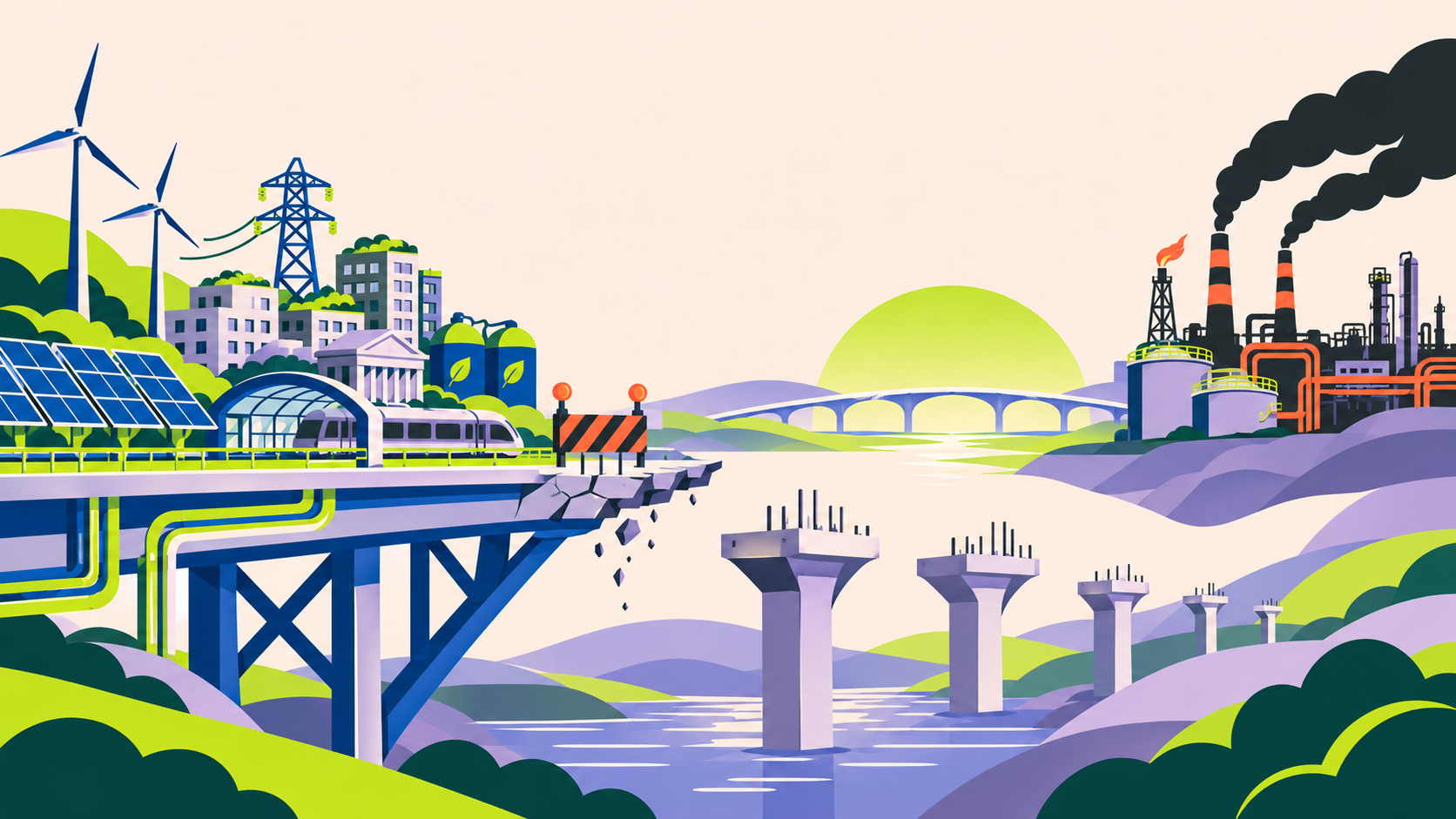
Editorial illustration of the transition from fossil fuel infrastructure to local clean energy.

Cities are among the places where climate policy most directly shapes everyday life. Energy consumption in buildings, public transport, energy poverty and preparedness for climate-related disasters are all directly within the remit of municipalities. Local governments must also have a voice in shaping national climate policies and direct access to climate finance. These demands were also part of local governments’ joint negotiating position at COP31.

One of the networks advocating this approach in Antalya was Climate Alliance. Built on more than 35 years of partnership between European municipalities and Indigenous Peoples in the Amazon, the network puts climate justice at the heart of local policy. It advocates for municipalities to participate as equal partners with national governments in shaping climate and energy policies. At COP31, it aimed to bring the voices of both municipalities and its Amazonian partners into the negotiations. In Antalya, the network also presented the results of its Green Footprints campaign, which involved around 250,000 children from 10 countries, and the children’s climate demands.

According to the UNFCCC, 69 cities with a combined population of 270 million joined an initiative for 12-month climate projects in Antalya. What matters now is how these commitments translate into budgets and everyday life: how many households will see their energy bills fall, how many neighbourhoods will become safer from disasters, and how many people will gain access to secure employment?

Climate finance: Who will pay?

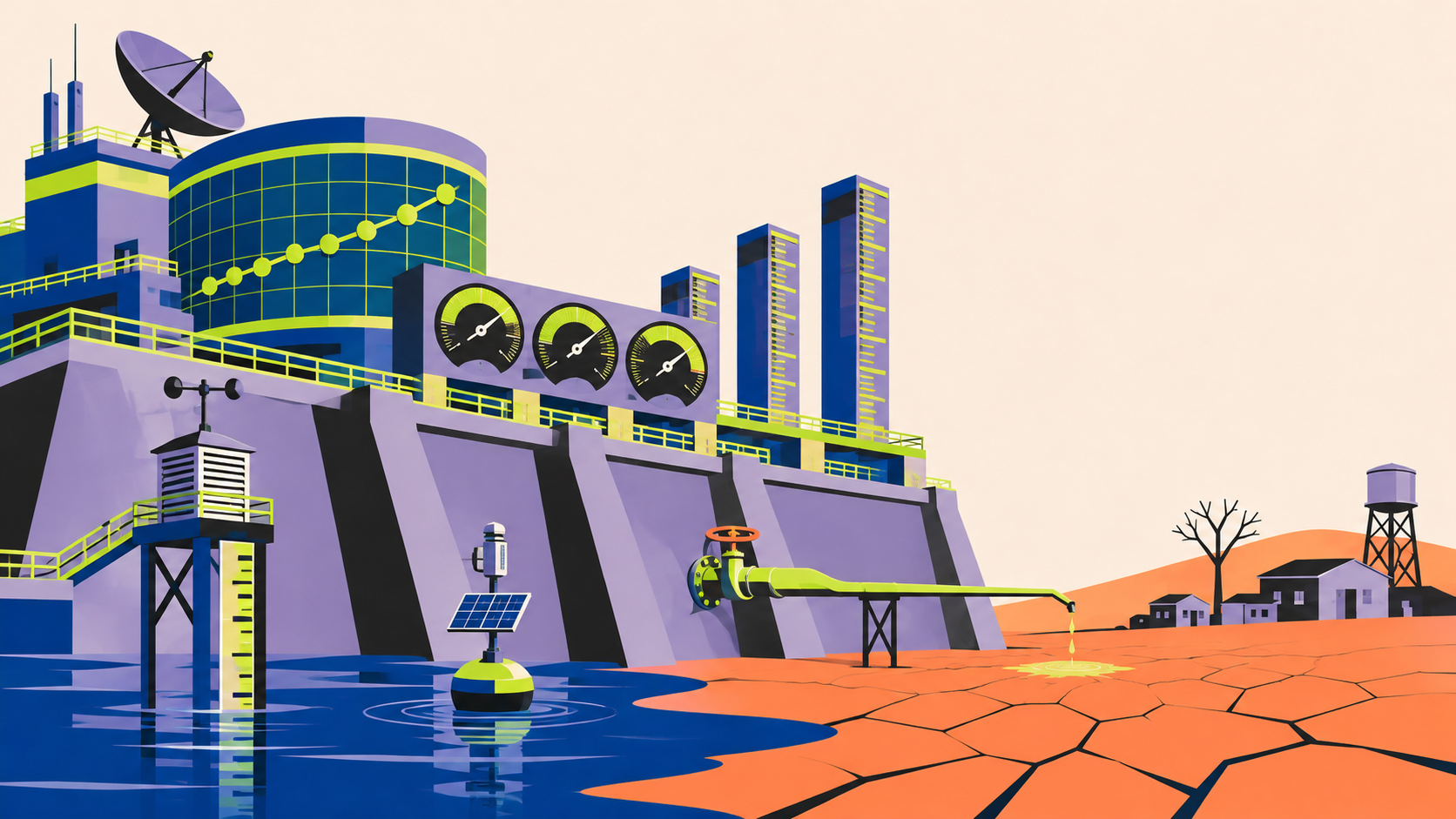
Editorial illustration of water, infrastructure and drought pressures.

At the heart of the finance debate in Antalya was the question of who should bear the cost of the climate crisis. Developed countries, responsible for a substantial share of historical emissions, are obliged under the Paris Agreement to provide financial support to developing countries. Disagreements persist over the amount, form and conditions of access to these resources.

New pledges are falling. According to an analysis published by Carbon Brief during COP31, newly announced public finance pledges for climate action in developing countries fell by more than 70% in 2026. This comparison concerns newly announced pledges; it does not mean that all climate finance actually disbursed fell by 70%.

Grants are particularly important for adaptation investments. Flood protection, early warning systems, public healthcare and drought-resilient local food systems do not always generate a commercial return for investors. Financing these services through loans can put further pressure on public budgets in countries already carrying high levels of debt. Even where private investment is feasible, it should be clear which risks are borne by public resources and who receives the returns.

Loss and damage finance is a separate responsibility. Support for communities losing their homes, livelihoods and infrastructure to the now unavoidable consequences of climate change should be directly accessible and designed to avoid creating new debt. Progress was made on technical assistance channels in Antalya; this does not mean that adequate funding is available.

The next step is to distinguish grants, loans and private investment within the figures announced by countries, and to disclose new and additional resources, disbursement schedules and beneficiaries. Direct access for local governments and communities must also be part of the financing architecture.

Carbon Brief · new finance pledges · UNEP · adaptation finance · Third World Network · finance negotiations

The future of the COP system after Antalya

On 24 November, the Financial Times reported that the EU would prepare a proposal to reform the consensus-based decision-making model of UN climate negotiations. The debate follows events in Antalya, where a small number of countries were able to oppose stronger fossil fuel language and the overarching political decision ultimately failed to be adopted. COP31 had also seen discussions on the effectiveness of the UNFCCC process. No new decision-making rule has yet been adopted.

Reforming the consensus principle could make it harder for a small number of countries to block climate action. Yet majority decision-making alone cannot guarantee climate justice. How would the voices of small island states, least developed countries and countries with limited diplomatic capacity be protected? Could countries with high historical responsibility block demands for finance? How would transparency in negotiations and observer organisations’ participation be safeguarded?

Alongside these questions, there is a concrete agenda for 2027. The June sessions in Bonn will address the operation of the just transition mechanism and other outstanding issues. As part of the follow-up to the Santa Marta process on a just transition away from fossil fuels, a preparatory meeting is planned in Dublin in May and a second international conference in Tuvalu in July. These are complementary political initiatives outside the UNFCCC. At COP32, planned for November in Addis Ababa, the unresolved issues from Antalya will return to the agenda.

The priorities to follow across these processes are clear: actual funding for the just transition mechanism; concrete commitments on adaptation finance; national plans for transitioning away from coal, oil and gas; measurable results from the targets announced by companies and governments; and participation in decision-making by those bearing the costs of the climate crisis.

Financial Times · 24 November · Fossil Fuel Treaty · Santa Marta process · UNFCCC · COP31 closing assessment

A final word from Antalya.

Over two weeks in Antalya, almost every aspect of the climate crisis was discussed. What matters now is where the relationships formed in conference rooms, municipalities, civil society gatherings and across the city will lead. Climate diplomacy must continue, but there is much that can be done before the next summit.

Which energy sources are used, how land is used, where public resources are allocated and who bears the cost of the transition are political decisions. Changing them requires greater decision-making power for workers, women, young people, Indigenous Peoples and communities directly affected by the climate crisis. The demands voiced in Antalya must not be confined to the side events of the next summit.

We take the question left by Antalya to Addis Ababa next year: will climate summits continue to manage the existing system, or will they take the decisions necessary to change it?

Sources and documents

Show source links

Official decisions, negotiating outcomes and diplomacy

Climate science, finance, representation and lobbying

Civil society, trade unions and the People’s Climate Summit

Antalya, local governments and COP31Radar’s work

Follow COP31 in your inbox.

Subscribe for independent analysis and practical guides.